All About English
Ask And You Shall RecieveAll About English
Ask And You Shall RecieveNew Words 001
You Can Download Any Of The Ziped Files Bellow to Improve Your Vocabulary Somehow It Should Be Said That These Selected Words Are The Words With Actually The Most Frequency In Usage But There Still Is Their Passwords You Will Need In Order To Get The Unique Pass You Gotta E-Mail Me To IRmeysam66@yahoo.com Then Leave Your Comment On My Weblog And Also Your Personal Weblog Or E-Mail And Ask To get The Pass Then I Will Send The Pass For You Dont Worry You Can Knock Anyone YOU Want Down With These You Gotta Believe In This Try It Out You Will See Yourself

More Than 6/000 Words Expressions Idioms Just Surf Them But DL Them First
Acoustic Stories & Books I
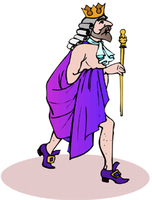
The Emperor’s New Clothes
Download the audio of the Emperor’s New Clothes (right click, save as)
The Emperor is enormously vain and likes nothing better than to show off his clothes. Two weavers comes to his court saying that they makes clothes that are like no others - anyone who is simple in the head, or unfit for his job, will not be able to see them.
All the courtiers say that the clothes are quite magnificent, and the Emperor plans to wear his new suit for the procession through the center of the City.
The moral of this story rings so very true ! What we are doing is totally absurd, but we can’t stop because everybody else seems to believe that it’s the right thing to do. And yet they can probably see it’s just as ridiculous as we can.
The little boy who literally sees through the Emperor’s New Clothes only appears for a moment, and yet he is one of the greatest heroes of all fairy tales - for he speaks the truth that nobody else dares to speak.
Read by Natasha. Duration 18 min.
Many years ago, there was an Emperor, who was so excessively fond of new clothes, that he spent all his money on the finest suits.
He did not trouble himself in the least about his soldiers; nor did he care to go to the theatre or out hunting, except when there was a chance to show off his new clothes.
He had a different suit for each hour of the day. Just as you might say of any other king or emperor, “He is sitting in his council” - people used to say of him, “He is sitting in his wardrobe.”
Time passed merrily in the large town which was his capital; strangers arrived every day at the court. One day, two rogues, calling themselves weavers came to the court. They said that they knew how to weave clothes of the most beautiful colors and elaborate patterns. The clothes made from their cloths were like no others: They were invisible to everyone who was either unfit for their job, or extremely simple in the head.
“These must, indeed, be splendid clothes!” thought the Emperor. “Had I such a suit, I might at once find out what men in my empire are unfit for their jobs, and also be able to tell the wise from the foolish! This stuff must be woven for me immediately.”
And he ordered large sums of money to be given to both the weavers so that they might begin their work.
So the two false weavers set up two looms, and pretended to work very busily, though in reality they did nothing at all. They asked for the most delicate silk and the purest gold thread; put both into their own knapsacks; and then continued their pretend work at the empty looms until late at night.
“I should like to know how the weavers are getting on with my cloth,” said the Emperor to himself, after some little time had gone by; he was, however, rather embarrassed, when he remembered that a simpleton, or someone unfit for his office, would be unable to see the results of their work.
To be sure, he himself not have any trouble seeing the clothes, but yet, thought it would be better to send somebody else to report on the weavers and their work.
All the people throughout the city had heard of the wonderful cloth; and all were anxious to earn how wise, or how ignorant, their neighbors might prove to be.
“I will send my faithful old minister to the weavers,” said the Emperor at last, after some thought “he will be best able to see how the cloth looks; for he is a man of sense, and no one can be more suitable for his office than he is.”
So the faithful old minister went into the hall, where the knaves were working with all their might, at their empty looms. “What can be the meaning of this?” thought the old man, opening his eyes very wide. “I cannot see the least bit of thread on the looms.” However, he did not speak his thoughts aloud.
The tricksters asked him very politely to be so good as to come nearer their looms; and then asked him whether the design pleased him, and whether the colors were not very beautiful; at the same time pointing to the empty frames. The poor old minister looked and looked, he could not see anything on the looms, for a very good reason: there was nothing there.
“What!” thought he again. “Is it possible that I am a simpleton? I have never thought so myself; and no one must know it now if I am so. Can it be, that I am unfit for my office? No, that must not be said either. I will never confess that I could not see the stuff.”
“Well, Sir Minister!” said one of the knaves, still pretending to work. “You do not say whether the stuff pleases you.”
“Oh, it is excellent!” replied the old minister, looking at the loom through his spectacles. “This pattern, and the colors, yes, I will tell the Emperor without delay, how very beautiful I think them.”
“We shall be much obliged to you,” said the impostors, and then they named thedifferent colors and described the pattern of the pretended stuff. The old minister listened attentively to their words, in order that he might repeat them to the Emperor; and then the knaves asked for more silk and gold, saying that it was necessary to complete what they had begun. However, they put all that was given them into their knapsacks; and continued to work with as much pretend effort as before at their empty looms.
The Emperor now sent another officer of his court to see how the men were getting on, and to find out whether the cloth would soon be ready. It was just the same with this gentleman as with the minister; he looked at the looms on all sides, but could see nothing at all but the empty frames.
“Does not the stuff appear as beautiful to you, as it did to my lord the minister?” asked the impostors of the Emperor’s second ambassador; at the sametime making the same gestures as before, and talking of the design and colors which were not there.
“I certainly am not stupid!” thought the messenger. “It must be, that I am not fit for my good, well-paid job! That is very odd; however, no one shall know anything about it.” And therefore he praised the stuff he could not see, and declared that he was delighted with both colors and patterns. “Indeed, please your Imperial Majesty,” said he to the emperor when he returned, “the cloth which the weavers are preparing is extraordinarily magnificent.”
The whole city was talking of the splendid cloth which the Emperor had ordered to be woven at his own expense.
And now the Emperor for himself wished to see the costly manufacture, while it was still in the loom. Accompanied by a select number of officers of the court, among whom were the two honest men who had already admired the cloth, he went to the crafty impostors, who, as soon as they knew the Emperor was on his way, went on working more hard than ever; although they still did not pass a single thread through the looms.
“Is not the work absolutely magnificent?” said the two officers of the crown, who already who had been before: “If your Majesty will only be pleased to look at it! What a splendid design! What glorious colors!” and at the same time they pointed to the empty frames; for they imagined that everyone else could see this exquisite piece of workmanship.
“How is this?” said the Emperor to himself. “I can see nothing! This is indeed a terrible affair! Am I a simpleton, or am I unfit to be an Emperor? That would be the worst thing that could happen”–”Oh! the cloth is charming,” said he, aloud. “It has my complete approval.” And he smiled most graciously, and looked closely at the empty looms; for on no account would he say that he could not see what two of the officers of his court had praised so much.
All his retinue now strained their eyes, hoping to discover something on the looms, but they could see no more than the others; nevertheless, they all exclaimed, “Oh, how beautiful!” and advised his majesty to have some new clothes made from this splendid material, for the public procession which was due to take place soon.
“Magnificent! Charming! Excellent!” everyone said on all sides; and everyone was uncommonly cheerful. The Emperor shared in the general satisfaction; and presented the impostors with the riband of an order of knighthood, to be worn in their button-holes, and the title of “Gentlemen Weavers.”
The rogues sat up the whole of the night before the day on which the procession was to take place, and had sixteen lights burning, so that everyone might see how anxious they were to finish the Emperor’s new suit. They pretended to roll the cloth off the looms; cut the air with their scissors; and sewed with needles without any thread in them. “See!” cried they, at last. “The Emperor’s new clothes are ready!”
And now the Emperor, with all the grandees of his court, came to the weavers; and the rogues raised their arms, as if holding something up, saying, “Here are your Majesty’s trousers! Here is the scarf! Here is the cloak! The whole suit is as light as a cobweb; one might fancy one has nothing at all on, when one is dressed in it; that, however, is the great virtue of this delicate cloth.”
“Yes indeed!” said all the courtiers, although not one of them could see anything of this exquisite manufacture.
“If your Imperial Majesty will be graciously pleased to take off your clothes, we will fit on the new suit, in front of the looking glass.”
The Emperor was accordingly undressed, and the rogues pretended to array him in his new suit; the Emperor turning round, from side to side, looking in the glass.
“How splendid his Majesty looks in his new clothes, and how well they fit!” everyone cried out. “What a design! What colors! These are indeed royal robes!”
“The canopy which is to be carried over your Majesty, in the procession, is waiting,” announced the chief master of the ceremonies.
“I am quite ready,” answered the Emperor. “Do my new clothes fit well?” asked he, turning himself round again before the looking glass, in order that he might appear to be examining his handsome suit.
The lords of the bedchamber, who were to carry his Majesty’s train felt about on the ground, as if they were lifting up the ends of the robes. and pretended to be carrying something; for they would by no means let anyone see that they were simple or unfit for their jobs.
So now the Emperor walked under his high canopy in the midst of the procession, through the streets of his capital; and all the people standing by, and those at the windows, cried out, “Oh! How beautiful are our Emperor’s clothes! What a magnificent train there is to the robes and how gracefully the scarf hangs!” In short, no one would allow that he could not see these much-admired clothes; because, in doing so, he would have declared himself either a simpleton or unfit for his job. Certainly, none of the Emperor’s various suits, had ever made so great an impression, as these invisible ones.
“But the Emperor has nothing at all on!” said a little child.
“Listen to the voice of innocence!” exclaimed his father; and what the child had said was whispered from one to another.
“But he has nothing at all on!” at last cried out all the people. The Emperor was suddenly embarrassed, for he knew that the people were right; but he thought the procession must go on now! And the lords of the bedchamber took greater pains than ever, to appear holding up the robes although, in reality, there were no robes at all.
And that’s the story of the Emperor’s New Clothes by Hans Christian Andersen.
Bertie says that in real life, people are often more silly in a crowd than they are on their own. If you think that everybody else believes something, then it must be true - and you have to be very brave to be like the little boy in the story and stand up and say what can see with your own eyes.
THE END
The Little Match-Seller
by
Hans Christian Andersen
(1846)
(The text is slightly different)
 T was terribly cold and nearly dark on the last evening of the old year, and the snow was falling fast. In the cold and the darkness, a poor little girl, with bare head and naked feet, roamed through the streets. It is true she had on a pair of slippers when she left home, but they were not of much use. They were very large, so large, indeed, that they had belonged to her mother, and the poor little creature had lost them in running across the street to avoid two carriages that were rolling along at a terrible rate. One of the slippers she could not find, and a boy seized upon the other and ran away with it, saying that he could use it as a cradle, when he had children of his own. So the little girl went on with her little naked feet, which were quite red and blue with the cold. In an old apron she carried a number of matches, and had a bundle of them in her hands. No one had bought anything of her the whole day, nor had anyone given her even a penny. Shivering with cold and hunger, she crept along; poor little child, she looked the picture of misery. The snowflakes fell on her long, fair hair, which hung in curls on her shoulders, but she regarded them not.
Lights were shining from every window, and there was a savory smell of roast goose, for it was New-year’s eve—yes, she remembered that. In a corner, between two houses, one of which projected beyond the other, she sank down and huddled herself together. She had drawn her little feet under her, but she could not keep off the cold; and she dared not go home, for she had sold no matches, and could not take home even a penny of money. Her father would certainly beat her; besides, it was almost as cold at home as here, for they had only the roof to cover them, through which the wind howled, although the largest holes had been stopped up with straw and rags. Her little hands were almost frozen with the cold. Ah! perhaps a burning match might be some good, if she could draw it from the bundle and strike it against the wall, just to warm her fingers. She drew one out—“scratch!” how it sputtered as it burnt! It gave a warm, bright light, like a little candle, as she held her hand over it. It was really a wonderful light. It seemed to the little girl that she was sitting by a large iron stove, with polished brass feet and a brass ornament. How the fire burned! and seemed so beautifully warm that the child stretched out her feet as if to warm them, when, lo! the flame of the match went out, the stove vanished, and she had only the remains of the half-burnt match in her hand.
She rubbed another match on the wall. It burst into a flame, and where its light fell upon the wall it became as transparent as a veil, and she could see into the room. The table was covered with a snowy white table-cloth, on which stood a splendid dinner service, and a steaming roast goose, stuffed with apples and dried plums. And what was still more wonderful, the goose jumped down from the dish and waddled across the floor, with a knife and fork in its breast, to the little girl. Then the match went out, and there remained nothing but the thick, damp, cold wall before her.
She lighted another match, and then she found herself sitting under a beautiful Christmas-tree. It was larger and more beautifully decorated than the one which she had seen through the glass door at the rich merchant’s. Thousands of tapers were burning upon the green branches, and colored pictures, like those she had seen in the show-windows, looked down upon it all. The little one stretched out her hand towards them, and the match went out.
The Christmas lights rose higher and higher, till they looked to her like the stars in the sky. Then she saw a star fall, leaving behind it a bright streak of fire. “Someone is dying,” thought the little girl, for her old grandmother, the only one who had ever loved her, and who was now dead, had told her that when a star falls, a soul was going up to God.
She again rubbed a match on the wall, and the light shone round her; in the brightness stood her old grandmother, clear and shining, yet mild and loving in her appearance. “Grandmother,” cried the little one, “O take me with you; I know you will go away when the match burns out; you will vanish like the warm stove, the roast goose, and the large, glorious Christmas-tree.” And she made haste to light the whole bundle of matches, for she wished to keep her grandmother there. And the matches glowed with a light that was brighter than the noon-day, and her grandmother had never appeared so large or so beautiful. She took the little girl in her arms, and they both flew upwards in brightness and joy far above the earth, where there was neither cold nor hunger nor pain, for they were with God.
In the dawn of morning there lay the poor little one, with pale cheeks and smiling mouth, leaning against the wall; she had been frozen to death on the last evening of the year; and the New-year’s sun rose and shone upon a little corpse! The child still sat, in the stiffness of death, holding the matches in her hand, one bundle of which was burnt. “She tried to warm herself,” said some. No one imagined what beautiful things she had seen, nor into what glory she had entered with her grandmother, on New-year’s day.
http://hca.gilead.org.il/li_match.html
Little Red Riding Hood
As retold by Glenn A. Hascall
There once was a small village on the edge of a thick forest. One of the smallest cottages was the home to one the prettiest girls in the village. Those who knew her well called her Little Red Riding Hood.
The little girl loved to visit her Grandma and on the day of our story, Little Red Riding Hood was on just such an adventure. Her mummy waved her goodbyes and reminded her daughter, "Grandma is ill. Take her this basket of cakes, but be very careful. Keep to the woodland path and don't stop for any reason."
Little Red Riding Hood was generally an obedient child, so she kissed her mother and ran off saying. "Don't worry, Mummy, I'll run all the way to Grandma's and I won’t stop."
Little Red Riding Hood made her way through the wood, but when she spotted a strawberry patch she forgot all her promises and began to pick strawberries one by one. Each tasted better than the last and they were large, juicy and ripe. And just when she thought she would stop picking the strawberries she found another that was even better than the last.
As she walked further into the woods looking for strawberries she discovered a beautiful yellow butterfly, some daisies and a handsome frog that made her giggle when he jumped.
Meanwhile there was a woodland creature that was watching Little Red Riding Hood. By the time she discovered she had wondered far from the path, a gruff voice said, "It is so alone out here in the woods. Where are you going, my dear girl?"
Unsure of what to say, Little Red Riding Hood replied "I'm taking Grandma some cakes. She lives at the end of the path."
When he heard this, the naughty wolf asked, "Does Grandma live all alone?"
"Yes," replied Little Red Riding Hood nervously.
"Thank you, my dear. You have been a great help. Perhaps we'll meet again," said the wolf who loped away thinking to himself "I'll take care of grandma first, then I‘ll take care of Little Red Riding Hood!"
Well that bad wolf found Grandma’s cottage and knocked on the door.
"Who's there?" asked Grandma from her bed.
"Little Red Riding Hood. I've brought you some cakes because you're ill," replied the wolf, trying hard to hide his gruff voice.
"Lift the latch and come in," said Grandma, unaware of the wolf’s deceit. In one bound, the wolf leapt across the room and tied Grandma up and sat her on a chair in the sun room.
It wasn’t long before Little Red Riding Hood knocked on the door. "Can I come in, Grandma?" she asked.
Now, the wolf had tried to dress like Grandma by wearing an old lady's shawl and cap. He tried to sound like Grandma by using a quavering little voice, "Open the latch and come in!” he said.
"What a deep voice you have," said the little girl in surprise.
"The better to greet you with," said the wolf.
"Goodness, what big eyes you have."
"The better to see you with."
"And what big hands you have!" exclaimed Little Red Riding Hood, stepping over to the bed.
"The better to hug you with," said the wolf.
"What a big mouth you have," the little girl murmured in a weak voice.
"The better to eat you with!" growled the wolf, and jumping out of bed. He might have done Little Red Riding Hood harm, but she leapt out of the way and he landed on the floor with a thud. Then he tripped over grandma‘s night shirt and fell on his head.
Little Red Riding Hood raced outside to find a nearby hunter who had been trying to catch this very same wolf because he had recently frightened three pigs who lived down the road.
While the wolf was rubbing the knot on his head the hunter captured him and took him away.
Little Red Riding Hood shared the cakes with Grandma and they each had a lovely cup of tea.
When the afternoon was coming to an end, Little Red Riding Hood walked home feeling safer than she had in a long time. She hugged her grandmother and said, “What an adventure we have had today."
Once home, a wiser Little Red Riding Hood told her mom, "We must always remember to keep to the woodland path and never stop for any reason!"
Her mother agreed.
THE END
A Chinese Fairytale
This story is read by Alessandro Cima
This story was written in 1904, by Laurence Housman. He was from England and wrote many stories, novels and plays. This story first appeared in a book of stories called The Blue Moon.
A Chinese Fairytale tells of the young Tiki-pu who wants desperately to learn how to paint. But he is only a servant and must resort to trickery in order to learn his craft.
A Chinese Fairytale
by Laurence Housman
(1904)
Tiki-pu s master professed to be an artist: he had apprentices and students, who came daily to work under him, and a large studio littered about with the performances of himself and his pupils. On the walls hung also a few real works by the older men, all long since dead.
This studio Tiki-pu swept; for those who worked in it he ground colours, washed brushes, and ran errands, bringing them their dog chops and bird's-nest soup from the nearest eating-house whenever they were too busy to go out to it themselves. He himself had to feed mainly on the breadcrumbs which the students screwed into pellets for their drawings and then threw about upon the floor. It was on the floor, also, that he had to sleep at night.
Tiki-pu looked after the blinds, and mended the paper window-panes, which were often broken when the apprentices threw their brushes and mahl-sticks at him. Also he strained rice-paper over the linen-stretchers, ready for the painters to work on; and for a treat, now and then, a lazy one would allow him to mix a colour for him. Then it was that Tiki-pu's soul came down into his finger-tips, and his heart beat so that he gasped for joy. Oh, the yellows and the greens, and the lakes and the cobalts, and the purples which sprang from the blending of them! Sometimes it was all he could do to keep himself from crying out.
Tiki-pu, while he squatted and ground at the colour-powders, would listen to his master lecturing to the students. He knew by heart the names of all the painters and their schools, and the name of the great leader of them all who had lived and passed from their midst more than three hundred years ago; he knew that too, a name like the sound of the wind, Wio-wani: the big picture at the end of the studio was by him.
That picture! To Tiki-pu it seemed worth all the rest of the world put together. He knew, too, the story which was told of it, making it as holy to his eyes as the tombs of his own ancestors. The apprentices joked over it, calling it "Wio-wani's back-door," "Wio-wani's night-cap," and many other nicknames; but Tiki-pu was quite sure, since the picture was so beautiful, that the story must be true.
Wio-wani, at the end of a long life, had painted it; a garden full of trees and sunlight, with high-standing flowers and green paths, and in their midst a palace. "The place where I would like to rest," said Wio-wani, when it was finished.
So beautiful was it then, that the Emperor himself had come to see it; and gazing enviously at those peaceful walks, and the palace nestling among the trees, had sighed and owned that he too would be glad of such a resting-place. Then Wio-wani stepped into the picture, and walked away along a path till he came, looking quite small and far-off, to a low door in the palace-wall. Opening it, he turned and beckoned to the Emperor; but the Emperor did not follow; so Wio-wani went in by himself, and shut the door between himself and the world for ever.
That happened three hundred years ago; but for Tiki-pu the story was as fresh and true as if it had happened yesterday. When he was left to himself in the studio, all alone and locked up for the night, Tiki-pu used to go and stare at the picture till it was too dark to see, and at the little palace with the door in its wall by which Wio-wani had disappeared out of life. Then his soul would go down into his finger-tips, and he would knock softly and fearfully at the beautifully painted door, saying, "Wio-wani, are you there?"
Little by little in the long-thinking nights, and the slow early mornings when light began to creep back through the papered windows of the studio, Tiki-pu's soul became too much for him. He who could strain paper, and grind colours, and wash brushes, had everything within reach for becoming an artist, if it was the will of fate that he should be one.
He began timidly at first, but in a little while he grew bold. With the first wash of light he was up from his couch on the hard floor, and was daubing his soul out on scraps, and odds-and-ends, and stolen pieces of rice-paper.
Before long the short spell of daylight which lay between dawn and the arrival of the apprentices to their work did not suffice him. It took him so long to hide all traces of his doings, to wash out the brushes, and rinse clean the paint-pots he had used, and on the top of that to get the studio swept and dusted, that there was hardly time left him in which to indulge the itching appetite in his fingers.
Driven by necessity, he became a pilferer of candleÄends, picking them from their sockets in the lanterns which the students carried on dark nights. Now and then one of these would remember that, when last used, his lantern had had a candle in it, and would accuse Tiki-pu of having stolen it. "It is true," he would confess ; "I was hungry--I have eaten it." The lie was so probable, he was believed easily, and was well beaten accordingly. Down in the ragged linings of his coat Tiki-pu could hear the candle-ends rattling as the buffeting and chastisement fell upon him, and often he trembled lest his hoard should be discovered. But the truth of the matter never leaked out and at night, as soon as he guessed that all the world outside was in bed, Tiki-pu would mount one of his candles on a wooden stand and paint by the light of it, blinding himself over his task, till the dawn came and gave him a better and cheaper light to work by.
Tiki-pu quite hugged himself over the results; he believed he was doing very well. "If only Wio-wani were here to teach me," thought he, "I would be in the way of becoming a great painter!"
The resolution came to him one night that Wio-wani should teach him. So he took a large piece of rice-paper and strained it, and sitting down opposite "Wio-wani's back-door," began painting. He had never set himself so big a task as this; by the dim stumbling light of his candle he strained his eyes nearly blind over the difficulties of it; and at last was almost driven to despair. How the trees stood row behind row, with air and sunlight between, and how the path went in and out, winding its way up to the little door in the palace-wall were mysteries he could not fathom. He peered and peered and dropped tears into his paint-pots; but the secret of the mystery of such painting was far beyond him.
The door in the palace-wall opened; out came a little old man and began walking down the pathway towards him.
The soul of Tiki-pu gave a sharp leap in his grubby little body. "That must be Wio-wani himself and no other!" cried his soul.
Tiki-pu pulled off his cap and threw himself down on the floor with reverent grovellings. When he dared to look up again Wio-wani stood over him big and fine; just within the edge of his canvas he stood and reached out a hand.
"Come along with me, Tiki-pu!" said the great one. "If you want to know how to paint I will teach you."
"Oh, Wio-wani, were you there all the while?" cried Tiki-pu ecstatically, leaping up and clutching with his smeary little puds the hand which the old man extended to him.
"I was there," said Wio-wani, "looking at you out of my little window. Come along in!"
Tiki-pu took a heave and swung himself into the picture, and fairy capered when he found his feet among the flowers of Wio-wani's beautiful garden. Wio-wani had turned, and was ambling gently back to the door of his palace, beckoning to the small one to follow him; and there stood Tiki-pu, opening his mouth like a fish to all the wonders that surrounded him. "Celestiality, may I speak?" he said suddenly.
"Speak," replied Wio-wani; "what is it?"
"The Emperor, was he not the very flower of fools not to follow when you told him?"
"I cannot say," answered Wio-wani, "but he certainly was no artist."
Then he opened the door, that door which he had so beautifully painted, and led Tiki-pu in. And outside the little candle-end sat and guttered by itself, till the wick fell overboard, and the flame kicked itself out, leaving the studio in darkness and solitude to wait for the growings of another dawn.
It was full day before Tiki-pu re- appeared; he came running down the green path in great haste, jumped out of the frame on to the studio floor, and began tidying up his own messes of the night and the apprentices' of the previous day. Only just in time did he have things ready by the hour when his master and the others returned to their work.
All that day they kept scratching their left ears, and could not think why; but Tiki-pu knew, for he was saying over to himself all the things that Wio-wani, the great painter, had been saying about them and their precious productions. And as he ground their colours for them and washed their brushes, and filled his famished little body with the breadcrumbs they threw away, little they guessed from what an immeasurable distance he looked down upon them all, and had Wio-wani's word for it tickling his right ear all the day long.
Now before long Tiki-pu's master noticed a change in him; and though he bullied him, and thrashed him, and did all that a careful master should do, he could not get the change out of him. So in a short while he grew suspicious. "What is the boy up to?" he wondered. "I have my eye on him all day: it must be at night that he gets into mischief."
It did not take Tiki-pu's master a night's watching to find that something surreptitious was certainly going on. When it was dark he took up his post outside the studio, to see whether by any chance Tiki-pu had some way of getting out; and before long he saw a faint light showing through the window. So he came and thrust his finger softly through one of the panes, and put his eye to the hole.
There inside was a candle burning on a stand, and Tiki-pu squatting with paint-pots and brush in front of Wio-Wani's last masterpiece.
"What fine piece of burglary is this?" thought he; "what serpent have I been harbouring in my bosom? Is this beast of a grub of a boy thinking to make himself a painter and cut me out of my reputation and prosperity?" For even at that distance he could perceive plainly that the work of this boy went head and shoulders beyond his, or that of any painter then living.
Presently Wio-wani opened his door and came down the path, as was his habit now each night, to call Tiki-pu to his lesson. He advanced to the front of his picture and beckoned for Tiki-pu to come in with him; and Tiki-pu's master grew clammy at the knees as he beheld Tiki-pu catch hold of Wio-wani's hand and jump into the picture, and skip up the green path by Wio-wani's side, and in through the little door that Wio-wani had painted so beautifully in the end wall of his palace!
For a time Tiki-pu's master stood glued to the spot with grief and horror. "Oh, you deadly little underling! Oh, you poisonous little caretaker, you parasite, you vampire, you fly in amber!" cried he, "is that where you get your training? Is it there that you dare to go trespassing; into a picture that I purchased for my own pleasure and profit, and not at all for yours? Very soon we will see whom it really belongs to!"
He ripped out the paper of the largest window-pane and pushed his way through into the studio. Then in great haste he took up paint-pot and brush, and sacrilegiously set himself to work upon Wio-wani's last masterpiece. In the place of the doorway by which Tiki-pu had entered he painted a solid brick wall; twice over he painted it, making it two bricks thick; brick by brick he painted it, and mortared every brick to its place. And when he had quite finished he laughed, and called "Good-night, Tiki-pu!" and went home to bed quite happy.
The next day all the apprentices were wondering what had become of Tiki-pu; but as the master himself said nothing, and as another boy came to act as colour-grinder and brush-washer to the establishment, they very soon forgot all about him.
In the studio the master used to sit at work with his students all about him, and a mind full of ease and contentment. Now and then he would throw a glance across to the bricked-up doorway of Wio-wani's palace, and laugh to himself, thinking how well he had served out Tiki-pu for his treachery and presumption.
One day--it was five years after the disappearance of Tiki-pu--he was giving his apprentices a lecture on the glories and the beauties and the wonders of Wio-wani's painting--how nothing for colour could excel, or for mystery could equal it. To add point to his eloquence, he stood waving his hallds before Wio-wani's last masterpiece, and all his students and apprentices sat round him and looked.
Suddenly he stopped at mid-word, and broke off in the full flight of his eloquence, as he saw something like a hand come and take down the top brick from the face of paint which he had laid over the little door in the palace- wall which Wio-wani had so beautifully painted. In another moment there was no doubt about it; brick by brick the wall was being pulled down, in spite of its double thickness.
The lecturer was altogether too dumfounded and terrified to utter a word. He and all his apprentices stood round and stared while the demolition of the wall proceeded. Before long he recognised Wio-wani with his flowing white beard; it was his handiwork, this pulling down of the wall! He still had a brick in his hand when he stepped through the opening that he had made, and close after him stepped Tiki-pu!
Tiki-pu was grown tall and strong--he was even handsome; but for all that his old master recognised him, and saw with an envious foreboding that under his arms he carried many rolls and stretchers and portfolios, and other belongings of his craft. Clearly Tiki-pu was coming back into the world, and was going to be a great painter.
Down the garden-path came Wio-wani, and Tiki-pu walked after him; Tiki-pu was so tall that his head stood well over Wio-wani's shoulders--old man and young man together made a handsome pair.
How big Wio-wani grew as he walked down the avenues of his garden and into the foreground of his picture! and how big the brick in his hand! and ah, how angry he seemed!
Wio-wani came right down to the edge of the picture-frame and held up the brick. "What did you do that for?" he asked.
"I . . . didn't!" Tiki-pu's old master was beginning to reply; and the lie was still rolling on his tongue when the weight of the brick-bat, hurled by the stout arm of Wio-wani, felled him. After that he never spoke again. That brick-bat, which he himself had reared, became his own tombstone.
Just inside the picture-frame stood Tiki-pu, kissing the wonderful hands of Wio-wani, which had taught him all their skill. "Good-bye, Tiki-pu!" said Wio-wani, embracing him tenderly. "Now I am sending my second self into the world. When you are tired and want rest come back to me: old Wio-wani will take you in."
Tiki-pu was sobbing, and the tears were running down his cheeks as he stepped out of Wio-wani's wonderfully painted garden and stood once more upon earth. Turning, he saw the old man walking away along the path toward the little door under the palace-wall. At the door Wio-wani turned back and waved his hand for the last time. Tiki-pu still stood watching him. Then the door opened and shut, and Wio-wani was gone. Softly as a flower the picture seemed to have folded its leaves over him.
Tiki-pu leaned a wet face against the picture and kissed the door in the palace-wall which Wio-wani had painted so beautifully. "O Wio-wani, dear master," he cried, "are you there?"
He waited, and called again, but no voice answered him.
Bertie Valentine.
Hello this is Natasha and Im dropping by to tell you the true storynory of Prince Bertie the Frogs Valentines Day.
Have you heard about Valentines Day
Its a very special day. Every year on the 14th of February you send cards to people you love and care about.
And if there is someone you have been secretly admiring you can send them a card and not say who it is from.
That sounds terribly mysterious and exciting.
Anyway a few days ago I was going for a walk and I was thinking about who I might send a Valentines Card to this year when I walked past the pond where Prince Bertie the frog lives with all his friends.
And I saw Bertie sitting there looking very sad.
Tim the Tadpole was trying to cheer him up.
Lets go for a walk Bertiesaid Tim.
You havent got any legs Timsaid Bertie.
Lets play hopscotch.
Nosnapped Bertie.
Or skipping ….
Bertie looked blankly at his legless little friend as if he were a rather silly tadpole - which of course he was.
Cmon Bertiesaid Colin the Grumpy Carp Theres nothing like a good old moan to improve everybodys mood. One two three….ugggggggg
When I saw how my friend Bertie looked I felt rather sorry for him and I knelt down by the edge of the pond. Why so sadI asked.
Bertie blushed a shade of deepest green and got all shy. He sighed a bit and at length he said .Well let me tell you a story and it will all become clear.
As his story was rather short - Ill just tell it to you quickly. Once upon time there was a handsome brave and gallant prince who was engaged to be married to a beautiful princess. Then one day a wicked queen got rather cross and shouted out a magic spell that turned him into a frog. For a whole year he sat on aLilly leaf and cried big fat tears but then on a bright wintry day his princess came wondering by the pond. She saw the sad little creature picked him up in her hand and kissed him. For you see although he was a frog he was still terribly handsome and she just couldnt resist his charms. No sooner had she kissed him than he turned back into a prince and they got married and lived happily ever after. THE END.
When I heard the story I knew what Bertie meant. He was hoping for a Valentines day kiss from the lovely Princess Beatrice for that would turn him back into a prince. But Colin the Carp was far from convinced.
Boringhe said.Fairy tales always end in soppy kisses and happy ever after - but thats because they are made up. If you ask me - which nobody ever does around this pond - in Real Life no self-respecting princess would kiss an ugly little frog not if even if you gave her a whole palace made of gold and filled to the top of its towers with pearls frilly dresses diamond tiaras and Girls AloudCDs not even then could she bring herself to kiss Bertie.
Just then Sadie the Swan glided across the pond. Oh yes she couldshe said. Princesses are always on the look out for frogs to kiss…Its their royal duty. We must lure the Lovely Princess Beatrice to walk past he pond on Valentines Day when shes in her most dreamy and romantic mood and shes sure to kiss Bertie because being a true princess shell just know that really hes a handsome prince under a magic spell.
So all the pond life thought very hard about how to get The Lovely Princess Beatrice to walk past the pond and see Bertie. They thought and thought…and Tim was thinking so hard he fell over backwards.
And then Sadie came up with a clever plan — because Sadie knows all about Valentines Day and usually gets dozens of cards from swans all over the world.
I knowshe said. Well ask Natasha to send an announcement to The Palace Radio Station. Princess Beatrice will hear it shell know it was meant for her and shell come down to the pond plant kiss on Bertie and they will both live happily ever after.
Gosh I say thats really jolly clever Sadiesaid Bertie.
And so it was done.
On Valentines day the Royal DJ was only playing romantic soppy love songs and in between records he was reading out even gooier Valentines messages. It was all rather boring really but everyone in the palace was listening out just in case they heard a message that was meant for them.
Eventually he read out the lines for Princess Beatrice - but because it was a Valentines message and meant to be sort of secret it didnt actually mention any names. The DJ purred.
Greetings Royal pop-pickers. heres a message to get young hearts beating - not arf. if you go down to the palace pond today only kiss a frog and your every wish will come true - all right stay bright. And now heres a cool chart-topper from years gone by - Save All Your kisses for Me by the Brother Hood of Man.
All the girls who lived in the palace and in the houses near by heard the message on the palace radio and each one of them wondered who would be the lucky girl who found the right frog to kiss and whose every wish would come true. And the same thought popped through the heads of quite a few of them. I wonder if maybe just maybe it might be me.Even I thought the same for a moment - and then I remembered that Im not a true princess just Berties special story teller and so my wishes wouldnt come true even if I did kiss him. So I decided not to after all.
On Valentines Day His Royal Highness Prince Bertie the Frog peeked out from behind his lilly pad and looked at his reflection in the pond. His skin was a nice shiny shade of green. He sipped up some water and swilled away all the traces of green slime from around his mouth. It was apity that he he couldnt do anything about the bumps on his head and back but all the same he was certain that if the Lovely Princess Beatrice felt like kissing a frog that morning it might as well be him.
The mood on the pond was terribly romantic. He could see that Sadie had already received a sackful of Valentine cards.
Tim had received one - from his mum.
And Colin had received one as well from Chloe Carp and he was swimming around in quite an excited way - but actually that card was from Bertie playing a joke on him.
Bertie couldnt wait for the lovely Princess Beatrice to come down and kiss him.
So he hopped up onto the bank of the pond and looked out across to the Palace.
Soon a small girl came along and immediately she saw bertie she cooed Oooh Look Nanny a frog let me kiss him quick and all my wishes will come true.Bertie tried to hop away as fast as he could but the girls brother caught him and held Bertie up to his sisters lips.
Go on nowsaid the boy - who was really rather horrid - kissy kissy
Oooohsaid the girl scrunching up her face Hes so shiny and green - quite quite the ugliest little creature I ever did see - but Im sure that hell turn into a prince if I kiss him so I suppose I had just better get it over withAnd she closed her eyes and kissed Bertie. Bertie thought the kiss was perfectly horrible and he wriggled and wriggled trying to escape but the boy thought it was hilarious and he put Bertie in his satchel and took him to school. In the play ground the girls queued up and paid the boy with their pocket money or toffee apples orchewie sweets and each one of them kissed Bertie to see if he would turn into a prince for them and each one of them was disappointed that nothing happened - because none of them was a true princess. Some of them burst into tears.
It was a very miserable Bertie who eventually hopped back to the pond after receiving more kisses than he could count.
He was about to dive into the slimy green water when he saw Princess Beatrice. She was walking down to the pond looking for a frog to kiss - for - when she heard the message on the radio she suspected that her wicked step mother might have turned her beloved Prince Bertie into a frog - because she hadnt seen or heard from him for quite a while now - and she knew that she must find him and kiss him. Bertie became ever so excited and started to hop up and down but Beatrice didnt see him. Instead she spotted Old Tommy Frog Tim the tadpoles grandfather whod been sent down to check that Tim had received his card.
Beatrice my darlingBertie tried to cry out - but the only sound that came out of his mouth was a big croak.
And Princess Beatrice was so lost in her thoughts that she didnt even hear his croaking.
Instead she knelt down and gave old grandfather Tommy a peck on the bump of his head. He got the shock of his ancient life and dived straight back into the pond.
I wish that Prince Bertie would come home soonsaid Beatrice before adding hmmm I .m not sure that I really like kissing frogs but I suppose its my royal duty once in a while. And then she turned around and headed straight back to the palace.
And Bertie felt a bit sad about that. But then he cheered up…because he knew the lovely Princess Beatrice still loved him and was thinking about him on Valentines Day and wishing that he would come home.
And as Bertie went to sleep under his lilly he could see Colin swimming around looking at his card and saying I wonder who Chloe Carp is
And thats the true storynory of Berties Valentines Day.
I hope you have a great day.
منبع:دستایار آموزش زبان انگلیسی
The Conscious Word - Daily Affirmations Emailed Directly To You -
You already know that practicing affirmations is a great way of improving your health, increasing your happiness and awakening your receptivity to prosperity and all the good you desire in your life. Now The Conscious Living Foundation has created a new method of supporting you in your efforts.
The Conscious Word contains an inspiring affirmation, with instructions on how to practice it, emailed directly to you each day of the year. By practicing the affirmation which we email to you for 3 to 4 minutes a day, you create an effective tool that will help you experience an ongoing positive change in your life.
Now is the time to make a new effort to take control of your life with just one small step toward the positive changes you've been seeking. For more information and an example issue, just click Here.
THE STORY

Once upon a time there were three little pigs.
One morning, the mother pig said, "You must go into the world and make your own way."
So the three little pigs set out into the world.
The first little pig met a man carrying a bundle of straw and said, "Please may I have some of your straw to build a house with?"
The man gave him some straw and the little pig built himself a fine straw house to live in.
Soon, a hungry wolf came along. He knocked at the door and said, "Little pig, little pig, let me come in."
"No, no, by the hair of my chinny chin chin. I won't let you in."
"Then I'll huff and I'll puff and I'll blow your house in."
So he huffed and he puffed and he blew the house in and ate up the first little pig.
English Short Story 009
Tom Thumb
Retold by Joseph Jacobs
IN the days of the great Prince Arthur, there lived a mighty magician, named Merlin, the most learned and skillful enchanter the world has ever seen.
This famous magician, who could take any form he pleased, was travelling about as a poor beggar, and being very tired he stopped at the cottage of a Ploughman to rest himself, and asked for some food.
The countryman bade him welcome, and his wife, who was a very good- hearted woman, brought him some milk in a wooden bowl and some coarse brown bread on a platter.
Merlin was much pleased with the kindness of the Ploughman and his wife; but he could not help noticing that though everything was neat and comfortable in the cottage, they both seemed to be very unhappy. He therefore asked them why they were so melancholy, and learned that they were miserable because they had no children.
The Poor Woman said, with tears in her eves: "I should be the happiest creature in the world if I had a son although he was no bigger than my husband's thumb."
Merlin was so much amused with the idea of a boy no bigger than a man's thumb that he determined to grant the Poor Woman's wish. Accordingly, in a short time after, the Ploughman's wife had a son, who, wonderful to relate! was not a bit bigger than his father's thumb.
The Queen of the fairies, wishing to see the little fellow, came in at the window, while the mother was sitting up in bed admiring him. The Queen kissed the child, and, giving it the name of Tom Thumb, sent for some of the fairies, who dressed her little godson according to her orders:
An oak-leaf hat he had for his crown;
His shirt of web by spiders spun;
With jacket wove of thistle's down;
His trousers were of feathers done.
His stockings, of apple rind, they tie
With eyelash from his mother's eye:
His shoes were made of mouse's skin,
Tann'd with the downy hair within.
Tom never grew any larger than his father's thumb, but as he got older he became very cunning and full of tricks. When he was old enough to play with the boys, and had lost all his own cherry stones, he used to creep into the bags of his play-fellows, fill his pockets, and, getting out without their noticing him, would again join in the game.
One day, as he was coming out of a bag of cherry stones, where he had been stealing as usual, the boy to whom it belonged chanced to see him. "Ah, ah! my little Tommy," said the boy, "so I have caught you stealing my cherry stones at last, and you shall be rewarded for your thievish tricks." On saying this, he drew the string tight round his neck, and gave the bag such a hearty shake that poor little Tom's legs, thighs and body were sadly bruised. He roared out with pain and begged to be let out, promising never to steal again.
A short time afterwards his mother was making a batter pudding, and Tom, being anxious to see how it was made, climbed up to the edge of the bowl; but his foot slipped, and he plumped over head and ears into the batter, without his mother noticing him, who stirred him into the pudding-bag, and put him in the pot to boil.
The batter filled Tom's mouth, and prevented him from crying; but, upon feeling the hot water, he kicked and struggled so much in the pot that his mother thought that the pudding was bewitched, and, pulling it out of the pot, she threw it outside the door. A poor tinker, who was passing by, lifted up the pudding, put it in his bag, and walked off. As Tom had now got his mouth cleared of the batter, he began to cry aloud, which so frightened the tinker that he flung down the pudding and ran away. The pudding being broke to pieces by the fall, Tom crept out covered all over with the batter, and walked home. His mother, who was very sorry to see her darling in such a woeful state, put him into a teacup and soon washed off the batter; after which she kissed him and laid him in bed.
Soon after the adventure of the pudding, Tom's mother went to milk her cow in the meadow, and she took him along with her. As the wind was very high, for fear of being blown away, she tied him to a thistle with a piece of fine thread. The cow soon observed Tom's oak-leaf hat, and liking the appearance of it, took poor Tom and the thistle at one mouthful. While the cow was chewing the thistle Tom was afraid of her great teeth, which threatened to crush him in pieces, and he roared out as loud as he could: "Mother, mother!"
"Where are you, Tommy, my dear Tommy?" said his mother.
"Here, mother," replied he, "in the red cow's mouth."
His mother began to cry and wring her hands; but the cow, surprised at the odd noise in her throat, opened her mouth and let Tom drop out. Fortunately his mother caught him in her apron as he was falling to the ground, or he would have been dreadfully hurt. She then put Tom in her bosom and ran home with him.
Tom's father made him a whip of barley straw to drive the cattle with, and having one day gone into the fields, Tom slipped a foot and rolled into the furrow. A raven, which was flying over, picked him up and flew with him over the sea, and there dropped him.
A large fish swallowed Tom the moment he fell into the sea, which was soon after caught and bought for the table of King Arthur. When they opened the fish in order to cook it, every one was astonished at finding such a little boy, and Tom was quite delighted at being free again. They carried him to the King, who made Tom his dwarf, and he soon became a great favorite at court; for by his tricks and gambols he not only amused the King and Queen, but also the Knights of the Round Table.
It is said that when the King rode out on horseback he often took Tom along with him, and if a shower came on he used to creep into his Majesty's waistcoat pocket, where he slept till the rain was over.
King Arthur one day asked Tom about his parents, wishing to know if they were as small as he was, and whether they were well off. Tom told the King that his father and mother were as tall as anybody about the court, but in rather poor circumstances. On hearing this, the King carried Tom to his treasury, the place where he kept all his money, and told him to take as much money as he could carry home to his parents, which made the poor little fellow caper with joy. Tom went immediately to procure a purse which was made of a water-bubble, and then returned to the treasury, where he received a silver three-penny piece to put into it.
Our little hero had some difficulty in lifting the burden upon his back; but he at last succeeded in getting it placed and set forward on his journey. Without meeting with any accident, and after resting himself more than a hundred times by the way, in two days and two nights he reached his father's house in safety.
Tom had traveled forty-eight hours with a huge silver piece on his back, and was almost tired to death, when his mother ran out to meet him and carried him into the house. But he soon returned to court.
As Tom's clothes had suffered much in the batter pudding and the inside of the fish, his Majesty ordered him a new suit of clothes, and to be mounted as a knight on a mouse.
Of Butterfly's wings his shirt was made,
His boots of chicken's hide;
And by a nimble fairy blade,
Well learned in the tailoring trade,
His clothing was supplied.
A needle dangled by his side;
A dapper mouse he used to ride,
Thus strutted Tom in stately pride!
It was certainly very amusing to see him in this dress and mounted on the mouse, as he rode out a-hunting with the King and nobility, who were all ready to expire with laughter at Tom and his fine prancing charioteer.
The King was so charmed with his address that he ordered a little chair to be made, in order that Tom might sit upon his table, and also a palace of gold, a span high, with a door an inch wide, to live in. He also gave him a coach, drawn by six small mice.
The Queen was so enraged at the honors conferred on Sir Thomas that she resolved to ruin him, and told the King that the little knight had been saucy to her.
The King sent for Tom in great haste, but being fully aware of the danger of royal anger, he crept into an empty snail shell, where he lay for a long time until he was almost starved with hunger; at last he ventured to peep out, and seeing a fine large butterfly on the ground, near the place of his concealment, he got close to it and jumping astride on it was carried up into the, air. The butterfly flew with him from tree to tree and from field to field, at last returned to the court, where the King and nobility all strove to catch him; but at last poor Tom fell from his seat into a watering-pot, in which he was almost drowned.
When the Queen saw him she was in a rage, and said he should be beheaded; and he was again put into a mouse trap until the time of his execution.
However, a cat, observing something alive in the trap, patted it about till the wires broke, and set Thomas at liberty.
The King received Tom again into favor, which he did not live to enjoy, for a large spider one day attacked him; and although he drew his sword and fought well, yet the spider's poisonous breath at last overcame him.
King Arthur and his whole court were so sorry at the loss of their little favorite that they went into mourning and raised a fine white marble monument over his grave with the following epitaph:
Here lies Tom Thumb, King Arthur's knight,
Who died by a spider's cruel bite.
He was well known in Arthur's court,
Where he afforded gallant sport;
He rode a tilt and tournament,
And on a mouse a-hunting went.
Alive he filled the court with mirth;
His death to sorrow soon gave birth.
Wipe, wipe your eyes, and shake your head
And cry,-Alas! Tom Thumb is dead!
(from The Junior Classics: Volume One, Fairy and Wonder Tales , selected and arranged by William Patten)
Businessman and fisherman
The businessman was at the pier of a small coastal Mexican village when a small boat with just one fisherman docked. Inside the small boat were several large fish. The businessman complimented the Mexican on the quality of his fish and asked how long it took to catch them. The Mexican replied only a little while.
The businessman then asked why he didn't stay out longer and catch more fish? The Mexican said he had enough to support his family's immediate needs. The businessman then asked, but what do you do with the rest of your time? The Mexican fisherman said, "I sleep late, fish a little, play with my children, take a siesta with my wife, Maria, stroll into the village each evening where I sip wine and play guitar with my amigos; I have a full and busy life, sir."
The businessman scoffed, "I am a Harvard MBA and I could help you. You should spend more time fishing and with the proceeds buy a bigger boat. With the proceeds from the bigger boat you could buy several boats; eventually you would have a fleet of fishing boats. Instead of selling your catch to a middleman, you would sell directly to the processor and eventually open your own cannery. You would control the product, processing and distribution. You would need to leave this small coastal fishing village and move to Mexico City, then LA and eventually New York City where you would run your expanding enterprise."
The Mexican fisherman asked, "But sir, how long will this all take?" To which the businessman replied, "15-20 years." "But what then, sir?" The businessman laughed and said, "That's the best part! When the time is right you would announce an IPO and sell your company stock to the public and become very rich. You would make millions." "Millions, sir? Then what?" The businessman said, "Then you would retire. Move to a small coastal fishing village where you would sleep late, fish a little, play with your kids, take a siesta with your wife, stroll to the village in the evenings where you could sip wine and play your guitar with your amigos."
The fisherman, still smiling, looked up and said, "Isn't that what I'm doing right now?"
Attitude Is Everything
by: Brian Cavanaugh, T.O.R., A Cup of Chicken Soup for the Soul
Jerry was the kind of guy you love to hate. He was always in a good mood and always had something positive to say. When someone would ask him how he was doing, he would reply, "If I were any better, I would be twins!"
He was a unique manager because he had several waiters who had followed him around from restaurant to restaurant. The reason the waiters followed Jerry was because of his attitude. He was a natural motivator. If an employee was having a bad day, Jerry was there telling the employee how to look on the positive side of the situation.
Seeing this style really made me curious, so one day I went up to Jerry and asked him, "I don't get it! You can't be a positive person all of the time. How do you do it?" Jerry replied, "Each morning I wake up and say to myself, 'Jerry, you have two choices today. You can choose to be in a good mood or you can choose to be in a bad mood.' I choose to be in a good mood. Each time something bad happens, I can choose to be a victim or I can choose to learn from it. I choose to learn from it. Every time someone comes to me complaining, I can choose to accept their complaining or I can point out the positive side of life. I choose the positive side of life."
"Yeah, right, it's not that easy," I protested. "Yes, it is," Jerry said. "Life is all about choices. When you cut away all the junk, every situation is a choice. You choose how you react to situations. You choose how people will affect your mood. You choose to be in a good mood or bad mood. The bottom line: It's your choice how you live life."
I reflected on what Jerry said. Soon thereafter, I left the restaurant industry to start my own business. We lost touch, but I often thought about him when I made a choice about life instead of reacting to it.
Several years later, I heard that Jerry did something you are never supposed to do in a restaurant business: he left the back door open one morning and was held up at gunpoint by three armed robbers. While trying to open the safe, his hand, shaking from nervousness, slipped off the combination. The robbers panicked and shot him. Luckily, Jerry was found relatively quickly and rushed to the local trauma center. After 18 hours of surgery and weeks of intensive care, Jerry was released from the hospital with fragments of the bullets still in his body.
I saw Jerry about six months after the accident. When I asked him how he was, he replied, "If I were any better, I'd be twins. Wanna see my scars?" I declined to see his wounds, but did ask him what had gone through his mind as the robbery took place. "The first thing that went through my mind was that I should have locked the back door," Jerry replied. "Then, as I lay on the floor, I remembered that I had two choices: I could choose to live, or I could choose to die. I chose to live." "Weren't you scared? Did you lose consciousness?" I asked. Jerry continued, "The paramedics were great. They kept telling me I was going to be fine. But when they wheeled me into the emergency room and I saw the expressions on the faces of the doctors and nurses, I got really scared. In their eyes, I read, 'He's a dead man.' "I knew I needed to take action."
"What did you do?" I asked.
"Well, there was a big, burly nurse shouting questions at me," said Jerry.
"She asked if I was allergic to anything. 'Yes,' I replied. The doctors and nurses stopped working as they waited for my reply. I took a deep breathe and yelled, 'Bullets!' Over their laughter, I told them. 'I am choosing to live. Operate on me as if I am alive, not dead." Jerry lived thanks to the skill of his doctors, but also because of his amazing attitude. I learned from him that every day we have the choice to live fully. Attitude, after all, is everything.